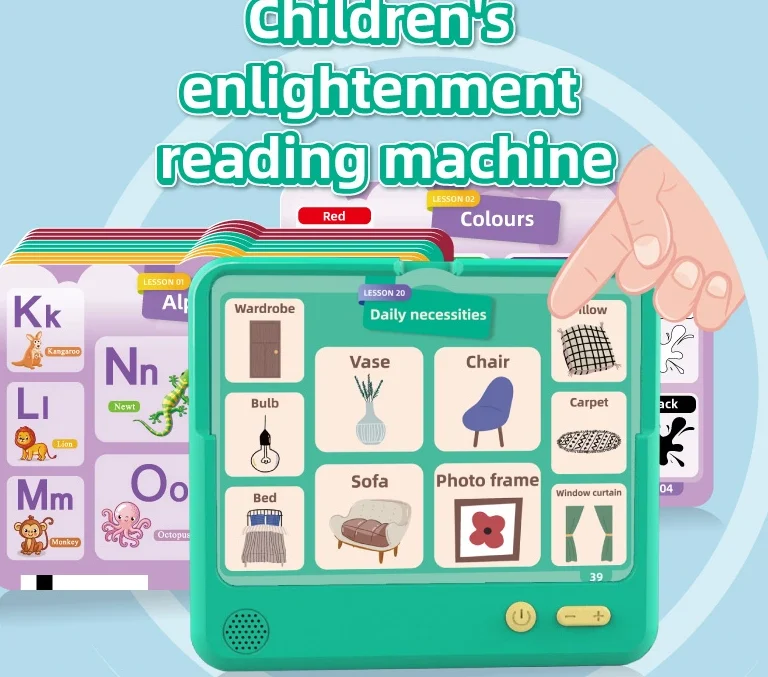
Reading is one of the most important skills that children learn at a young age. Nevertheless, learning skills such as letter recognition, sounds, and vocabulary might sometimes be challenging when children are taught using traditional methods of education. To make the reading learning process fun, it has become common practice for parents to choose interactive learning toys for their kids.
Learn to read toys allow children to experience reading through sounds, visuals, touch, and games. Rather than learning letters and vocabulary through mere memorization, children have a chance to develop the required reading skills through practical exercises.

Why Are Learn to Read Toys Important for Early Reading Development?
Supporting Letter Recognition and Phonics Skills
The development of reading skills is generally associated with letter recognition and awareness of the correlation between letters and sounds. In young kids from 2 to 5 years old, frequent engagement with words, pronunciations, and sentences is very helpful for developing language.
Interactive learning toys can be used to facilitate this process. Alphabet toys can help in learning letters, and toys related to phonics can help in practicing sounds and words. Frequent engagement will result in better reading skills.
Making Learning More Engaging Through Play
Children learn automatically via play and exploration. When education is made fun via play, the children will have increased participation and be more focused for long periods of time.
As opposed to non-participatory forms of education, interactive toys make children feel like touching things, listening, solving problems, and repeating the exercise. It can assist in improving memorization skills and making reading exercises easier.
The 7 Best Learn to Read Toys for Kids
Different types of reading toys are designed to support different learning stages. Parents can choose suitable options based on their child’s age, interests, and development needs.
| Toy Type | Recommended Age | Main Learning Benefits |
| Alphabet Learning Toys | 2-4 Years | Letter recognition and basic vocabulary |
| Phonics Learning Toys | 3-5 Years | Pronunciation and sound awareness |
| Interactive Reading Pens | 3+ Years | Listening and language skills |
| Word Building Games | 4-6 Years | Spelling and vocabulary growth |
| Storytelling Toys | 3-6 Years | Expression and creativity |
| Electronic Reading Toys | 4+ Years | Independent learning |
| Reading Puzzle Toys | 2-5 Years | Cognitive and literacy development |
1. Alphabet Learning Toys for Early Learners
Alphabet educational toys are typically the first step in developing the ability to read in children. Alphabet educational toys provide basic exposure to the alphabet through visually attractive design, sound, and interactivity, thus helping children learn the alphabet in a fun and engaging way.
For little children, visual design and effective feedback assume additional importance. Children can learn to recognize the alphabet by matching them with sounds and images time and again.
2. Phonics Learning Toys for Better Pronunciation
Phonics is an important tool that helps kids recognize how letters correspond to various sounds. Rather than memorizing whole words, children can learn reading patterns by associating various sounds with letters.
Phonics-based learn to read toys generally feature audio feedback, spelling games, and pronunciation activities. This means that children can develop naturally while gaining confidence in reading new words.
3. Interactive Reading Pens and Talking Books
Reading pens and audio books offer a fun and interactive way to make learning more interesting by combining books with digital interactions.
Kids get to listen to proper pronunciations, stories, and new words using just touch-based actions. This type of toy is very beneficial for improving listening skills and encouraging kids to read books on their own.
4. Word Building Toys for Vocabulary Development
Word building is a significant aspect of literacy development. Word-building toys enable kids to build words using letter manipulation, matching cards, or solving easy puzzles.
Such exercises aid in gaining knowledge about word formation and enhance spelling skills. For preschoolers, the learning process through games and puzzles makes word-building exercises more entertaining and easier to remember.
5. Storytelling Toys to Improve Language Expression
Reading involves comprehension and expression of ideas apart from recognizing words. Storytelling toys stimulate the child’s imagination and enable him/her to develop stories and express his/her views.
Through role-playing, kids can enhance their creativity and communication skills. The toy is also a good choice for parents who wish to join in the learning process of their kids.
6. Electronic Reading Toys for Independent Learning
Due to the emergence of smart technology, electronic educational toys have gained more popularity among young students. The toys incorporate features such as audio directions, questions, and various learning modes.
Children can learn at their own pace and perform the activities repeatedly if necessary. This ensures the creation of an independent learning habit among children while maintaining their interest in learning.
7. Reading Puzzle Toys Combining Learning and Problem-Solving
Reading puzzles are a way to develop literacy skills along with cognitive skills. Kids have to correlate pictures with words, solve sentence puzzles, or even language puzzles.
These activities help not only in developing reading skills but also observational skills, reasoning skills, and problem-solving skills. These games are perfect for kids who prefer experiential learning.
How to Choose the Right Learn to Read Toys for Different Ages?
Choosing the right educational toy depends on a child’s current learning stage. A suitable product should match their abilities while providing enough challenge to encourage progress.
| Age Group | Recommended Learning Focus |
| 2-3 Years | Letters, sounds, and simple words |
| 3-5 Years | Phonics, vocabulary, and sentence building |
| 5+ Years | Spelling, reading comprehension, and independent reading |
Besides educational value, parents should also consider product safety and quality. Materials should be child-friendly, designs should avoid sharp edges, and the toy structure should be durable enough for regular use.
How Do Parents Help Children Enjoy Reading at Home?
In order to improve reading skills, consistent practice is necessary, and toys form only a part of this process. Reading time, storytelling, and discussing what was read with children are among the ways for parents to provide a conducive reading environment.
A combination of reading materials, educational games, and activities may enable children to progress from guided reading to independent reading. If children find the learning process enjoyable, then there will be a greater possibility that they become interested in reading.
Conclusion
Choosing suitable learn to read toys can allow kids to develop early reading skills and make the process of learning fun at the same time. Various types of educational toys are helpful at various stages of child development, from alphabet learning to storytelling and vocabulary building.
Smart Tomato Toys specializes in developing fun educational toys that bring together learning and playing. If you have any questions regarding learn to read toys or educational toy customization, feel free to reach out to us. Our experts will be glad to assist you.