Be it a beginner or an expert, everyone’s entry into the world of numerical games starts with the same dilemma – where do I begin? It all depends on understanding Sudoku difficulty levels, which is not merely about classification but a well-organized way to cater to the skills of the player. It will help him avoid disappointment and keep enjoying the game. This tutorial will give you insight into the workings of the levels and progress through them.

Decoding Sudoku challenge levels
The primary factor that distinguishes Sudoku difficulty levels is not simply the number of pre-filled cells, but the complexity of the logical techniques required to solve the puzzle. A puzzle with fewer clues isn’t always harder; it’s the type of logic needed that truly matters.
- Easy: Such Sudokus are for those who are beginning to play them. Such puzzles can easily be solved using one type of logic process referred to as “singles,” whereby you place a number in a cell since it is the only available choice.
- Medium: At this stage, solvers must employ more advanced techniques. This includes “naked pairs” or “hidden pairs,” where the interaction between two cells in a row, column, or box eliminates possibilities for other cells. It requires a deeper level of scanning and pattern recognition.
- Hard & Expert: These Sudoku difficulty levels demand a sophisticated toolkit of strategies. Puzzles may involve methods such as X-Wing, Swordfish, and coloring. In many cases, these types of Sudoku may need thorough candidate notations and chain logic.
The Proper Sudoku Difficulty Levels for You
The choice of an appropriate Sudoku difficulty level is extremely crucial. You have to select the one that is challenging yet not too difficult for you to abandon your efforts.
- For newbies: Select the “Easy” or “Beginner” level. The main thing is to comprehend the basic idea: there must be unique numbers from 1 to 9 in each row, column, and 3×3 block. Pay attention to practicing simple scanning methods.
- For intermediate players: If you feel comfortable solving easy tasks fast, you may start playing harder ones. A medium level of difficulty introduces new logic concepts to your skills.
- For Advanced Players: “Hard” and “Expert” Sudoku difficulty levels are intended for people who know all standard techniques and want to be really challenged. These puzzles will test your ability to be patient, logical, and keep complex patterns in your mind.
Adaptation of Electronic Trainers to Sudoku Difficulty Levels
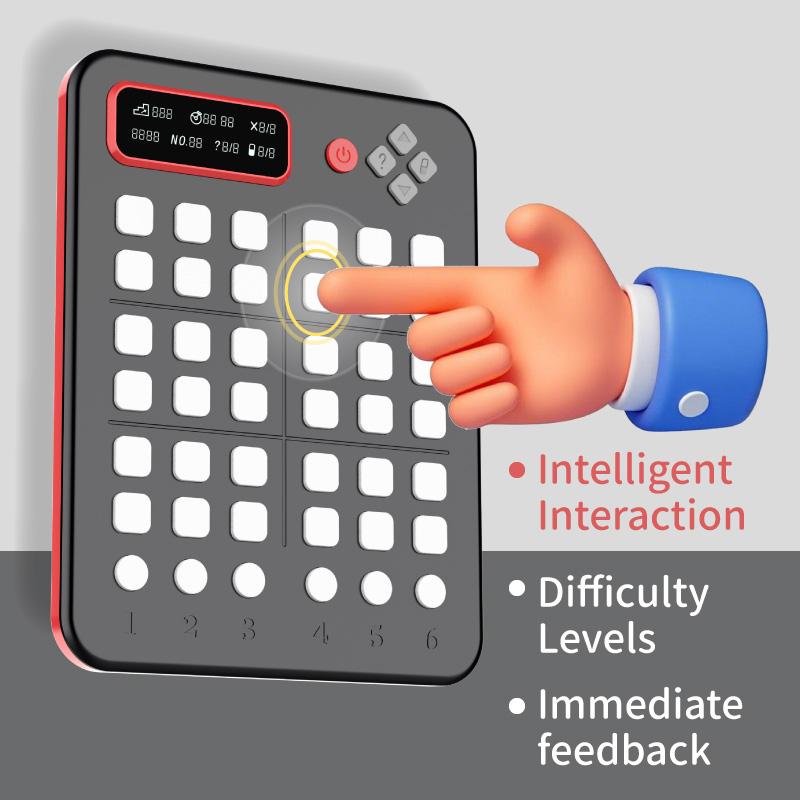
Although knowledge about the theory of difficulty levels of Sudoku is important, a proper tool to exercise with them is what really matters. Nowadays, there are special electronic Sudoku trainers developed especially for dealing with these difficulties.
- Smart Hints and Tutorials: If you have reached the next difficulty level of Sudoku and got stuck on solving it, an electronic trainer will not simply tell you the answer. Instead, it gives smart hints about the logic behind this particular problem and teaches you how to solve it using certain techniques.
- Seamless Progression: The electronic device is designed to hold an extensive collection of puzzles at all Sudoku difficulty levels. This means that you can seamlessly shift from one puzzle to another, from the Medium difficulty level to the Expert difficulty level without having to purchase a new book or find a new website.

Benefits of Progressive Sudoku Difficulty Levels
Engaging with a structured progression of Sudoku difficulty levels offers more than just entertainment; it provides a systematic way to train your brain.
- Brain Training: Moving forward with each difficulty level will force you to discover new heuristics for solving problems. The process will develop the neural pathways responsible for logical thinking, concentration, and memory.
- No Plateaus: Working with the same difficulty level will make you get into a rut when there is nothing to learn. It means that you need to gradually increase the difficulty level in order to train yourself further.
- Developing Persistence: Dealing with a difficult puzzle and its solution helps you develop persistence. Managing frustration with a difficult grid and finding a solution is a useful skill to have.
Tracking Your Progress Across Sudoku Challenge Levels
To truly benefit from a structured training regimen, you need to measure your improvement. This is where electronic trainers excel, providing objective data that paper puzzles simply cannot.
- Time & Error Tracking: An electronic Sudoku trainer meticulously records your performance across different Sudoku difficulty levels. It tracks not only your completion time but also the number of mistakes made. This data gives you an accurate evaluation of your real skill level at each level.
- Growth Visualization: By examining your historical data, it is easy to visualize your growth process from being a novice to becoming an expert. Your average solving time getting shorter on “Hard” levels or your mistakes getting fewer on “Expert” levels is evidence of your cognitive growth. This feedback loop is incredibly motivating and helps you identify which Sudoku difficulty tiers require more focused prac
Conclusion
Knowledge of the different degrees of difficulty of Sudoku is the secret to making a pastime that will be both fun. By choosing the appropriate degree of difficulty and gradually developing your skills, you will be able to make sure of it.
It is our pleasure to offer you our electronic trainers for puzzles at all stages of development. For more information on how to train your brain effectively, please follow our brand and discover our products. Let us help you turn every challenge into a victory.