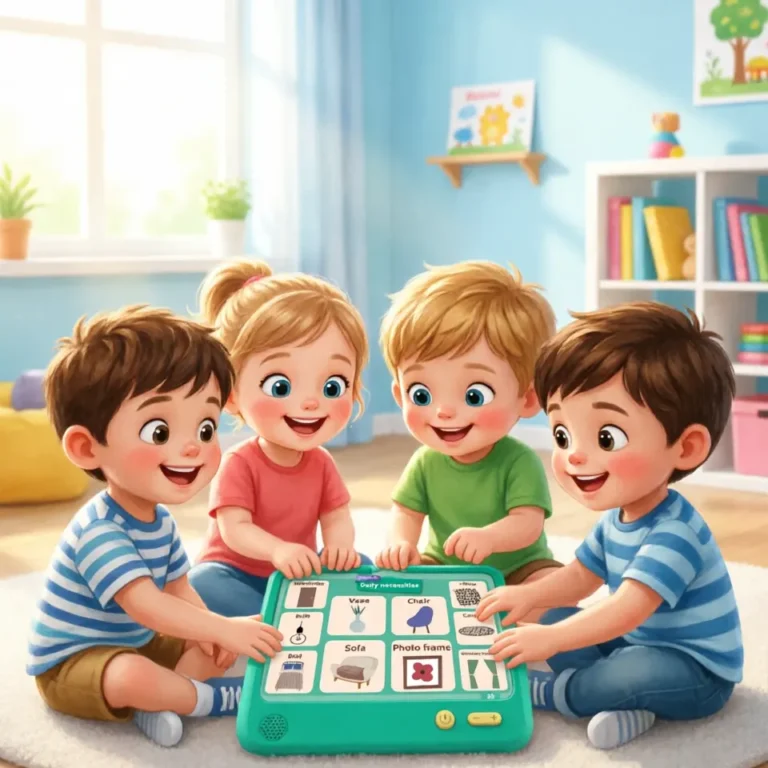
Learning takes place through play in the early crucial years. Brain development toys have emerged to effectively foster cognitive and intellectual growth by stimulating the development of brain cells. Say goodbye to passive entertainment; these toys require children to engage actively. From traditional puzzles to electronic logic games, they encourage a child to think and make plans, thus aiding in the formation of neural networks. This guide will delve into the science behind such toys and guide their selection.
Brain Development Toys Science
Brain development toys science is based on neuroscience in early childhood. The brain between the ages of 3 and 12 is very plastic and can form synaptic connections quickly. These toys utilize plasticity by giving the brain a workout. Solving problems through logic or patterns actually gives a workout to the following parts of the brain:
- Spatial Reasoning: The understanding of how objects work in space.
- Working Memory: Holding the memory in mind while performing difficult tasks.
- Executive Function: The planning and focus on the task at hand.
Cognitive development toys make sure that the child does not realize the fact that the brain is working hard because of all the fun.
Important Cognitive Skills Improved by Brain Development Toys
Not all toys are created equal. Toys that work towards developing certain cognitive skills would prove the best for promoting cognitive development. In light of present-day educational developments and toy design concepts, the following list gives the key abilities that cognitive development toys would help develop.
- Logical Thinking and Strategy Formulation
Logical thinking forms the basis of mathematics and computer science. Toys that entail sequencing—electronic puzzles and maze games included—would make kids think many moves ahead. Kids would have to evaluate the present situation, forecast what effect a particular move will have, and change their strategy should they fail to advance further. - Concentration and Focus
In a distracted world filled with digital distractions, being able to focus is like a superpower. Brain development toys used for developing the brain always need the child to focus their attention to be able to solve an activity. This could be either matching colors in the scientific thinking machine or solving Sudoku. - Mathematical and Numerical Sensitivity
Mathematics anxiety is a very common problem in today’s world; however, the introduction of numerical ideas at an early age through fun activities can reduce this. The toys used for developing the brain include counting, numerical recognition, or solving Sudoku to build an understanding of numbers in relation to one another.
 Comparison between Electronic and Traditional Learning Toys for Cognitive Development
The world of cognitive development toys has changed a great deal. Although the use of traditional wooden blocks and jigsaw puzzles is still effective, brain development toys have brought something different to the learning table.
The Traditional Way
Traditional toys involve physical manipulation and imagination. They are perfect for open-ended play and fine motor skills, but they do not offer a feedback system. Children don’t even realize they’ve put the puzzle pieces in the wrong place until an adult points it out.
The Electronic Advantage
The modern cognitive development toys also contain electronic components that serve to improve the learning process. The features of such devices are:
- Instant Feedback: The sensors detect the right and wrong movements made by the child and respond instantly through audio or visual feedback. This enables self-correction.
- Gradually increasing difficulty: The single-player mode features hundreds of levels, with the challenge level scaling alongside the child’s growth.
- No Screens: Compared to tablets, electronic logic toys have buttons, lights, and physical blocks that provide engagement with technology without the harm of blue light.
How to Choose the Right Cognitive Development Toys
The selection of the best cognitive development toys depends on the age and current stage of development of the child.
Age-appropriate toys
- Ages 3–5: Select toys that help children learn fundamental concepts such as colors, shapes, and patterns. Choose hard materials with large pieces.
- Ages 6-8: The best toys would be those that will engage the kid in basic logical thinking activities and understanding rules.
- Ages 9-12: Give them challenging tasks by using advanced logical thinking toys and science-based kits.
Safety and Quality
However good the educational value of a toy may be, its safety comes first. Brain development toys of high quality should contain only non-toxic materials such as ABS plastic. Their edges should not have sharp parts, and their electronic components should be safe and well-packed. Toys meeting international safety standards like CE or ASTM are recommended.
Educational Value versus Entertainment
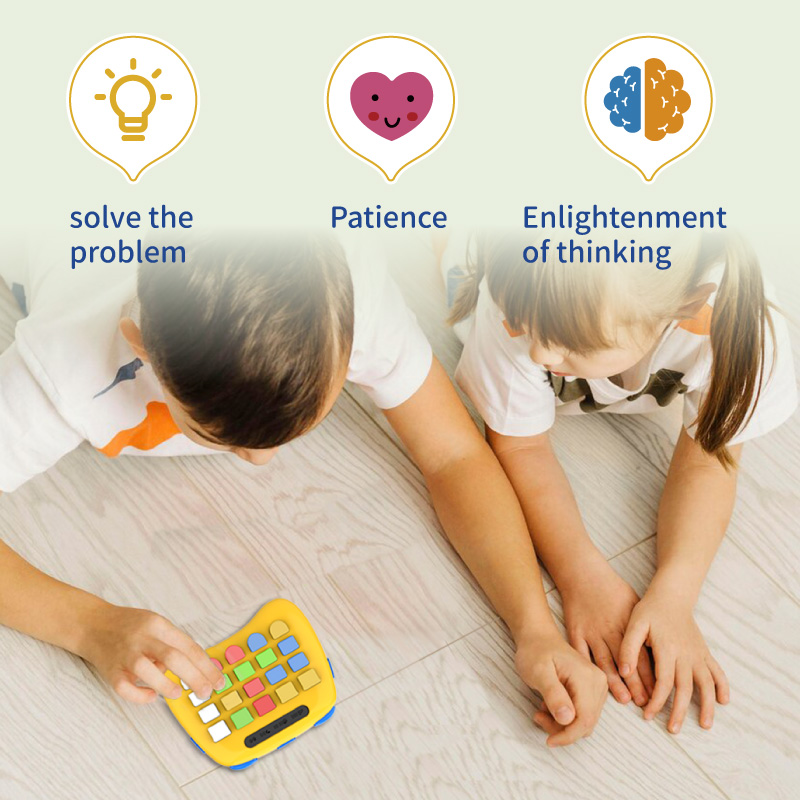
Ideally, there should be a balance between the educational value and entertainment of toys. A toy that is too educational seems like homework, while a toy entertaining enough has no value at all. Find cognitive development toys applying gamification principles—game-design elements used in non-game environments—to make learning addictive.
The Role of Parents in Play-Based Learning
While brain development toys are quite effective tools, they will be even more effective if applied in an adequate environment. In this connection, parents should make their contribution to increasing the effectiveness of their application.
- The art of encouragement: Valuing every attempt and effort a child makes when facing challenges more than the outcome.
- Participation: Sometimes, play yourself to show how to cope with difficulties and increase the emotional closeness between the parent and the kid.
- Consistency: Include playing time in your everyday schedule.
Conclusion: Making Investments in the Future
Cognitive development is a long journey, and brain-development toys are milestones along this path. By choosing toys that are designed to develop logic and reasoning, parents will provide a great opportunity for their kids. Regardless of whether you choose classic wooden puzzles or modern electronic trainers, the purpose is one: a love of learning. The market for such toys is developing further, giving the next generation cognitive instruments for success.